Choosing the best starting batteries for boats is one of the most important steps for ensuring reliable engine ignition, stable voltage during start-up, and dependable performance in a marine environment. Unlike automotive batteries, marine starting batteries must handle vibration, humidity, salt exposure, and long periods between trips. This guide explains how to select the right boat starting battery, which technologies work best, and what specifications matter most.
What a Marine Starting Battery Does
A starting battery for boats is designed to deliver a short, high-power burst to crank the engine. That’s different from deep cycle marine batteries, which provide steady power for longer periods to run onboard loads like lights, pumps, and electronics.
- High cranking power for quick engine start
- Fast energy delivery over a short time
- Ability to recharge quickly from the alternator
- Marine-ready durability against vibration and corrosion
If you install the wrong battery type, you may see slow starts, unstable voltage, or early battery failure.
Types of Starting Batteries for Boats
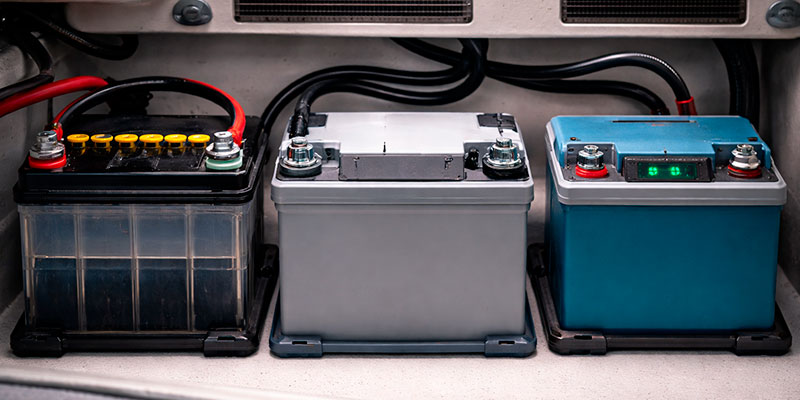
When shopping for marine starting batteries, you’ll typically choose between flooded lead-acid, AGM, and lithium options. Each has pros and cons depending on engine size, charging system, and how your boat is used.
1) Flooded Lead-Acid Marine Starting Batteries
Traditional flooded batteries are common in basic setups because they are widely available and budget-friendly.
- Pros: lower upfront cost, solid cranking power, easy to find
- Cons: may require maintenance, less vibration-resistant, risk of leakage if not installed properly
Best for: small boats, seasonal use, and owners who prioritize cost.
2) AGM (Absorbent Glass Mat) Marine Starting Batteries
AGM is often considered the best all-around choice among starting batteries for boats. They are sealed, maintenance-free, and handle harsh conditions better than flooded options.
- Pros: maintenance-free, strong cranking performance, vibration resistance, faster charging
- Cons: higher cost than flooded batteries, needs correct charging voltage
Best for: offshore boats, yachts, performance boats, and frequent use.
3) Lithium Starting Batteries
Lithium solutions are increasingly popular in modern marine electrical systems. They offer low weight, fast charging, and long life, but must match your charging system and may require additional integration.
- Pros: very lightweight, fast recharge, long lifespan, stable voltage
- Cons: higher price, compatibility requirements, may need a battery management system (BMS)
Best for: premium yacht systems, weight-sensitive setups, advanced electrical upgrades.
Key Specs to Compare When Choosing a Boat Starting Battery
To pick the best marine starting battery, don’t rely on size and brand alone. Focus on specifications that directly affect engine start reliability and safety.
Cold Cranking Amps (CCA)
CCA measures how much current a battery can deliver at low temperature. Higher CCA generally means easier starting, especially in colder climates. Always follow your engine manufacturer’s recommendations.
Marine Cranking Amps (MCA)
MCA (also called CA) measures cranking power at warmer temperatures and is often more relevant for boating conditions.
Reserve Capacity (RC)
Reserve capacity indicates how long the battery can support essential loads if the charging system fails. A higher RC offers a better safety margin.
Group Size and Fitment
Match the battery group size to your battery tray and hold-down hardware. Proper fitment reduces vibration damage and keeps terminals secure.
Vibration Resistance and Marine Construction
Boats experience constant movement. AGM designs and marine-rated construction typically hold up better over time, reducing internal damage and premature failure.
Maintenance Tips for Longer Battery Life
Even the best starting battery for a boat will fail early if it’s poorly installed or charged incorrectly. Use these basics to protect your investment.
- Keep terminals clean and protected from corrosion
- Use marine-grade cables and tinned copper lugs when possible
- Secure the battery firmly to reduce vibration stress
- Verify charging voltage is appropriate for your battery type
- Avoid deep discharging a dedicated starting battery
Common Mistakes When Buying Marine Starting Batteries
- Confusing starting batteries with deep cycle batteries
- Choosing a battery based only on price
- Installing an automotive battery instead of a marine-rated model
- Undersizing CCA/MCA for the engine
- Ignoring charging system compatibility (especially AGM and lithium)
Recommended System Setup: Separate Start and House Banks
For many boats, the most reliable approach is to use a dedicated starting battery bank for the engine and a separate house battery bank for electronics and accessories. This prevents onboard loads from draining the battery needed to crank the engine.
Consider using an automatic charging relay (ACR) or battery isolator to keep banks properly charged while protecting the start battery from house loads.
Conclusion
The best starting batteries for boats deliver strong cranking power, withstand vibration, and match your charging system. For most boat owners, AGM marine starting batteries offer the best balance of reliability, durability, and maintenance-free operation. Lithium starting batteries can be excellent for advanced setups, while flooded lead-acid remains a cost-effective option for simpler boats.
When selecting a boat starting battery, prioritize the right CCA/MCA, proper group size, and true marine-rated construction to ensure confident engine starts and long-term performance on the water.