Sacrificial anodes are small, relatively inexpensive components, but they perform an important job below the waterline. By deliberately corroding, they help protect more valuable metal components of a boat from electrochemical attack.
For boat owners, simply checking whether an anode is still physically present is not enough. Its material, remaining mass, installation, electrical connection and the condition of surrounding components all contribute to whether the protection system is functioning as intended.
What Is a Sacrificial Anode?
When different metals are electrically connected while immersed in an electrolyte such as seawater, brackish water or fresh water, electrochemical corrosion can occur.
A sacrificial anode is made from a material that is electrochemically less noble than the metal component it is intended to protect. As a result, the anode is preferentially consumed.
In other words, the anode is designed to corrode so that other metal components are protected as far as possible. Visible material loss is therefore normally part of its intended function rather than automatically being a defect.
How Do Sacrificial Anodes Work on a Boat?
A sacrificial anode forms part of the boat’s cathodic protection system. For the process to work correctly, the anode must be electrically connected to the component being protected and exposed to the surrounding water.
This is why the condition of the anode alone cannot tell the complete story. A heavily worn anode may be doing its job, but unusually rapid consumption can also indicate a problem elsewhere in the electrical or corrosion protection system.
Likewise, an anode that still looks almost new after a long period in the water is not necessarily a good sign.
Zinc, Aluminum or Magnesium Anodes?
Sacrificial anodes commonly use zinc-, aluminum- or magnesium-based alloys.
The correct choice depends on several factors, including:
- the operating water;
- the components being protected;
- the anode alloy;
- the design of the protection system;
- the manufacturer’s specifications.
Magnesium alloys are typically used in fresh water. Suitable aluminum and zinc alloys are used particularly in seawater and, depending on the application, in brackish water.
However, choosing an anode simply according to a rule such as “magnesium for fresh water, zinc for salt water” is too simplistic. The specifications of the equipment manufacturer and protection system should take priority.
Electrical Contact Is Essential
One of the most important requirements for an effective sacrificial anode is a sufficiently low-resistance electrical connection between the anode and the component being protected.
Problems may arise from:
- paint or coatings between the anode and its mounting surface;
- oxidized or contaminated contact surfaces;
- loose fasteners;
- unsuitable mounting components;
- heavy corrosion products around the contact area.
This means that an anode can still appear to be in excellent physical condition while providing inadequate protection.
The mounting surface needs reliable metal-to-metal contact, while the exposed surface of the anode must remain in contact with the surrounding water.
Never Paint a Sacrificial Anode
Sacrificial anodes should not be covered with antifouling, conventional paint or another electrically insulating coating.
Coating the anode reduces its electrochemically active surface and can significantly reduce or even prevent its protective function.
After antifouling work, anodes should therefore be checked to make sure their exposed surfaces remain free of paint.
How to Inspect a Boat Sacrificial Anode
A useful condition assessment involves more than estimating how much of the anode appears to be left.
Important inspection points include:
- remaining anode cross-section or mass;
- uniform or locally concentrated material loss;
- secure mechanical attachment;
- condition of the fasteners;
- electrically conductive connection to the protected component;
- corrosion patterns on nearby components;
- anode material and suitability for the operating environment.
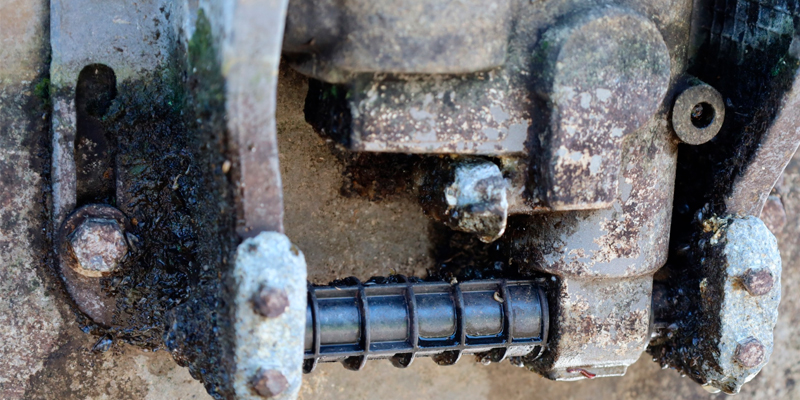
A photograph can document visible wear, deposits and corrosion-related changes, but it does not reliably establish the actual percentage of material consumed or prove that the protection system is working correctly.
When Should Sacrificial Anodes Be Replaced?
There is no reliable replacement interval based only on the age of an anode. Its actual condition matters more.
In maintenance practice, replacement is often considered when approximately half of the originally effective anode material has been consumed. This should be treated as a general guideline rather than a universal rule. Manufacturer instructions and the actual mechanical and electrochemical condition remain more important.
Replacement may also be necessary earlier if the anode:
- has become mechanically weakened;
- is loose;
- no longer has a reliable electrical connection.
What Does Excessive Anode Wear Mean?
A sacrificial anode disappearing unusually quickly does not automatically mean the corrosion protection system is working especially well.
Heavy consumption may indicate unfavorable galvanic conditions or an electrical fault.
Possible factors include:
- unfavorable combinations of electrically connected metals;
- faulty electrical connections between underwater components;
- unwanted direct currents or leakage currents;
- faults in the boat’s DC electrical system;
- influences from shore-power installations or the berth environment.
A professional assessment should also distinguish between galvanic corrosion and stray-current corrosion. The appearance of the anode alone is not enough to determine the exact cause.
What If the Anode Is Barely Wearing Away?
Very low anode consumption can also deserve attention.
If an anode shows practically no material loss after an extended period in the water, possible explanations include:
- poor or missing electrical contact;
- incorrect anode material or an unsuitable alloy;
- coated contact surfaces;
- incorrect installation.
Low consumption alone does not prove that the cathodic protection system is defective. It is an indication that may require further investigation.
Visual Inspection Does Not Prove Proper Protection
A visual inspection can provide useful information about installation, physical condition and visible anode consumption.
However, it does not always demonstrate whether the complete protection system is actually effective.
Depending on the inspection, further testing may include:
- electrical continuity testing;
- resistance testing;
- potential measurements;
- additional current or insulation measurements.
A continuity test, for example, confirms the presence of an electrical connection but does not by itself prove that the complete cathodic protection system is correctly designed and functioning effectively.
A Marine Surveyor’s Perspective
Marine surveyor Mike Ziegler emphasizes an important distinction when assessing sacrificial anodes: visible observations, technical indications and actual proof should not be treated as the same thing.
The appearance of an anode may reveal abnormalities or suggest that something deserves further investigation, but confirming adequate or inadequate cathodic protection requires consideration of the complete system and, where necessary, additional measurements.
If anode consumption is unusually high or conspicuously low, simply replacing the anode may address the visible symptom without identifying the underlying cause.
A sound technical assessment should therefore consider the complete picture:
anode condition + installation + electrical connection + material + operating waters + corrosion pattern of adjacent components.
Common Sacrificial Anode Mistakes
Several common maintenance mistakes can reduce protection or make anode condition difficult to interpret:
- painting over the exposed anode surface;
- allowing coatings or corrosion products between the anode and mounting surface;
- assuming an anode that looks new must be working correctly;
- selecting an anode only according to whether the boat operates in fresh or salt water;
- replacing an unusually worn anode without investigating the reason;
- assuming that electrical continuity alone proves effective cathodic protection.
Checking the complete protection system rather than the anode in isolation provides a much more useful picture of what is happening below the waterline.
Frequently Asked Questions
How much wear is acceptable on a sacrificial anode?
Approximately 50% consumption of the originally effective anode material is often used as a maintenance guideline. It is not a universal replacement rule, and manufacturer recommendations and actual condition should take priority.
Should boat anodes be painted?
No. Antifouling paint, conventional paint and other insulating coatings can interfere with the electrochemically active surface of the anode and reduce or prevent its protective function.
Why is my sacrificial anode wearing out very quickly?
Unusually high consumption may be associated with galvanic conditions, electrical faults, leakage currents, problems in the DC system or influences from shore-power installations and the berth environment. Proper diagnosis may require electrical testing.
Why does my sacrificial anode still look new?
Possible causes include inadequate electrical contact, an unsuitable anode material, coated contact surfaces or incorrect installation. However, low consumption alone does not prove that the system is faulty.
Can an anode be checked visually?
Visual inspection is useful for assessing physical condition, installation and visible material loss. It cannot always confirm the actual effectiveness of the complete cathodic protection system.
About the Expert
Mike Ziegler
Expert for Recreational Craft
TÜV Rheinland Certified in accordance with DIN EN ISO/IEC 17024
Condition Reports · Valuation & Damage Assessments · Diagnostic Modules
Eisenberger Straße 48A · 07616 Bürgel · Germany
M +49 151 149 79583
E kontakt@sv-mikeziegler.de
W www.sv-mikeziegler.de